


Western Canon

Prometheus Bound (479 BC)
Aeschylus based his epic drama on the legendary tale of Prometheus, the Titan who stole fire from the gods for the benefit of humanity. Prometheus's terrible punishment remains a universal symbol of human vulnerability in any struggle with the gods, and this ancient play continues to entrance audiences with its timeless appeal.

The Oedipus Trilogy (470 BC)
Sophocles' three Theban plays, Oedipus, Oedipus at Colonus, and Antigone, are cornerstones of Western civilization and dramatic history. Each play stems from the fated tragedy that Oedipus would kill his father and marry his mother.
East India Publishing, 2021, 200 pgs.

Hippolytus (428 BC)
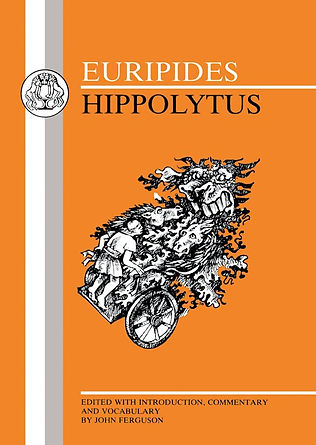
The myth of Hippolytus had many manifestations across the Mediterranean, with the same essential facts: a married woman becomes sexually obsessed with a younger man, and, when spurned, she responds to his rejection with persecution and retaliation (typically by accusing him of rape to her husband).
Peace (421 BC)
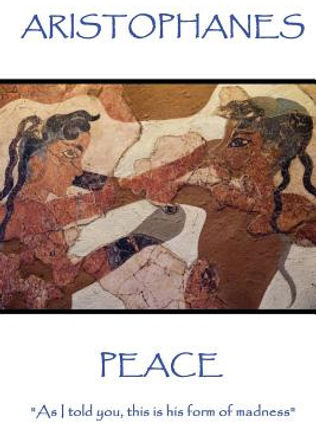
Aristophanes' Peace was performed at the City Dionysia in Athens in 421 B.C. as a decade-long war with Sparta seemed finally to be drawing to an end, and is one of only eleven extant plays by the greatest Old Comic poet.
Laws (356 BC)
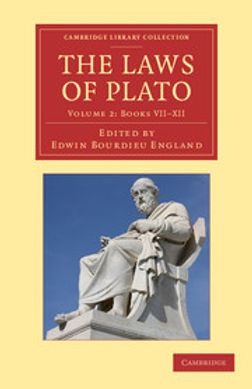
The Laws is Plato’s last, longest, and, perhaps, most loathed work. The book is a conversation on political philosophy between three elderly men: an unnamed Athenian, a Spartan named Megillus, and a Cretan named Clinias. These men work to create a constitution for Magnesia, a new Cretan colony. The government of Magnesia is a mixture of democratic and authoritarian principles that aim at making all of its citizens happy and virtuous.
Cambridge University, 607 pgs.
The Metaphysics (350 BC)
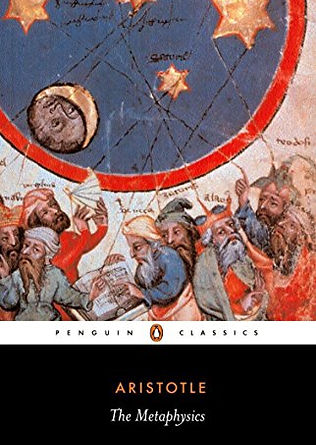
Metaphysics, for Aristotle, was the study of nature and ourselves. In this sense he brings metaphysics to this world of sense experience–where we live, learn, know, think, and speak. Metaphysics is the study of being qua being, which is, first, the study of the different ways the word “be” can be used.
Penguin Classics, 172 pgs.
The Histories (440 BC)
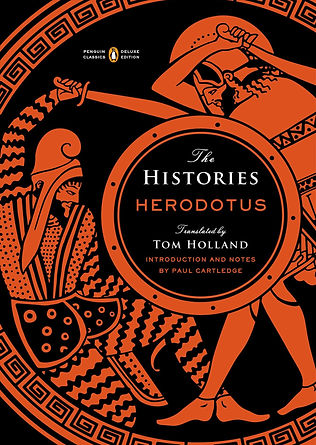
The Histories is considered the founding work of history in Western literature. In Tom Holland’s vibrant translation, one of the great masterpieces of Western history springs to life. Herodotus of Halicarnassus—hailed by Cicero as the “Father of History”—composed his histories around 440 BC.
Penguin Classics, 880 pgs.
The Genuine Works of Hippocrates
(400 BC)
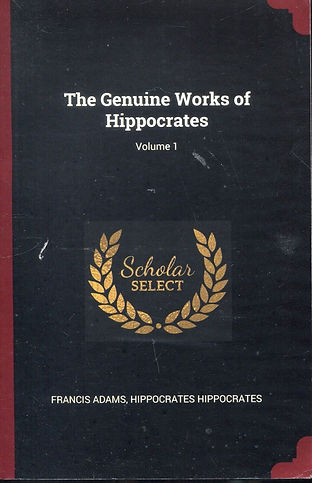
Hippocrates was a Greek physician of the classical period who is considered one of the most outstanding figures in the history of medicine. He is traditionally referred to as the "Father of Medicine" in recognition of his lasting contributions to the field, such as the use of prognosis and clinical observation, the systematic categorization of diseases, or the formulation of humoral theory. The Hippocratic school of medicine revolutionized ancient Greek medicine.
Forgotten Books, 492 pgs.
The Elements (300 BC)
The Elements is a mathematical treatise consisting of 13 books attributed to the ancient Greek mathematician Euclid in Alexandria, Ptolemaic Egypt c. 300 BC. It is a collection of definitions, postulates, propositions (theorems and constructions), and mathematical proofs of the propositions. Elements is the oldest extant large-scale deductive treatment of mathematics. It has proven instrumental in the development of logic and modern science, and its logical rigor was not surpassed until the 19th century.
Green Lion Press, 499 pgs.

On the Nature of Things (50 BC)
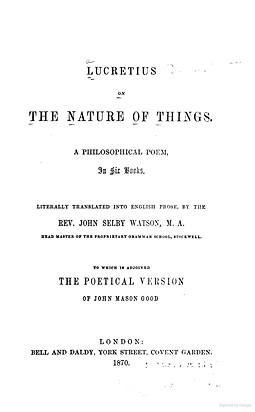
De rerum natura is a first-century BC didactic poem by the Roman poet and philosopher Lucretius with the goal of explaining Epicurean philosophy to a Roman audience.
Bell and Daldy, 332 pgs.
The Aeneid (19 BC)
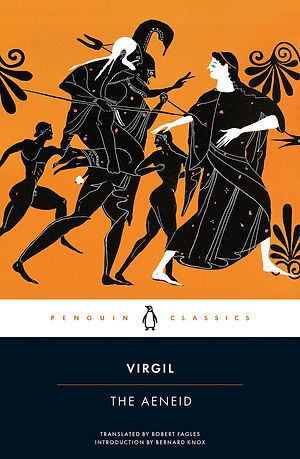
The Aeneid is a Latin epic poem that tells the legendary story of Aeneas, a Trojan who fled the fall of Troy and travelled to Italy, where he became the ancestor of the Romans. Written by the Roman poet Virgil between 29 and 19 BC, the Aeneid comprises 9,896 lines in dactylic hexameter.
Penguin Classics, 578 pgs.
Discourses (100 AD)
This work has been selected by scholars as being culturally important, and is part of the knowledge base of civilization as we know it. This work was reproduced from the original artifact, and remains as true to the original work as possible.
Penguin Classics, 366 pgs.

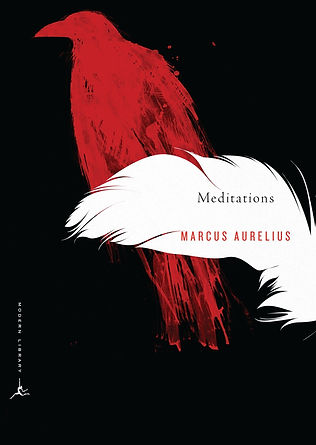
Meditations (180)
Nearly two thousand years after it was written, Meditations remains profoundly relevant for anyone seeking to lead a meaningful life. Few ancient works have been as influential as the Meditations of Marcus Aurelius, philosopher and emperor of Rome (A.D. 161–180). A series of spiritual exercises filled with wisdom, practical guidance, and profound understanding of human behavior, it remains one of the greatest works of spiritual and ethical reflection ever written.
Penguin Classics, 366 pgs.
On the Natural Faculties
(185)
Galen’s merit is to have crystallized or brought to a focus all the best work of the Greek medical schools which had preceded his own time. It is essentially in the form of Galenism that Greek medicine was transmitted to after ages.
The Loeb Classical Library, 408 pgs.

The Enneads (270)
The Enneads is the collection of writings of the philosopher Plotinus, edited and compiled by his student Porphyry (c. AD 270). Plotinus was a student of Ammonius Saccas, and together they were founders of Neoplatonism.
Penguin Classics, 712 pgs.

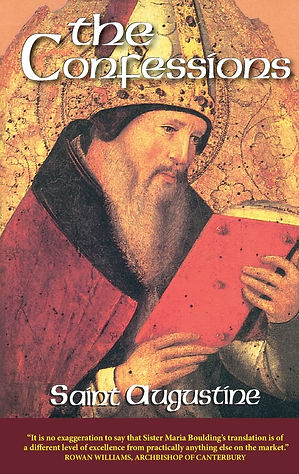
The Confessions (400)
The Confessions is an autobiographical work by Saint Augustine, consisting of 13 books written in Latin between AD 397 and 400. The work outlines Saint Augustine's sinful youth and his conversion to Christianity.
Penguin Classics, 356 pgs.
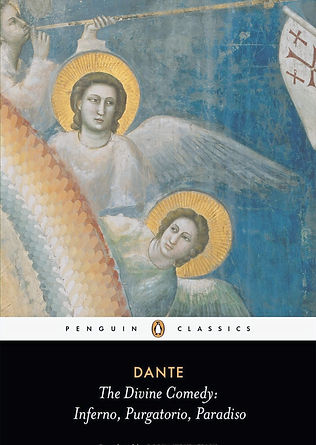
The Divine Comedy (1321)
The Divine Comedy is an Italian narrative poem by Dante Alighieri, begun 1308 and completed around 1321, shortly before the author's death. It is widely considered the pre-eminent work in Italian literature and one of the greatest works of world literature.
Penguin Classics, 752 pgs.
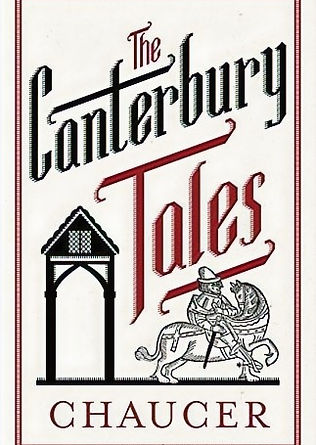
The Canterbury Tales (1400)
The Canterbury Tales, a collection of twenty-four stories that run to over 17,000 lines was written in Middle English by Geoffrey Chaucer between 1387 and 1400. It is widely regarded as Chaucer's magnum opus.
MacMillan and Co., Ltd., 515 pgs.
Summa Theologica (1485)
Often referred to simply as the Summa, Summa Theologica is the best-known work of Thomas Aquinas (1225–1274), a scholastic theologian and Doctor of the Church. It is a compendium of all of the main theological teachings of the Catholic Church, intended to be an instructional guide for theology students, including seminarians and the literate laity.
Coyote Canyon Press, 550 pgs.

Five Books of the Lives... (1532)
This work has been selected by scholars as being culturally important, and is part of the knowledge base of civilization as we know it. is a pentalogy of novels written in the 16th century by François Rabelais[a]. It tells the adventures of two giants, Gargantua and his son Pantagruel. The work is written in an amusing, extravagant, and satirical vein, features much erudition, vulgarity, and wordplay, and is regularly compared with the works of William Shakespeare and James Joyce.
University of Wisconsin - Madison, 322 pgs.

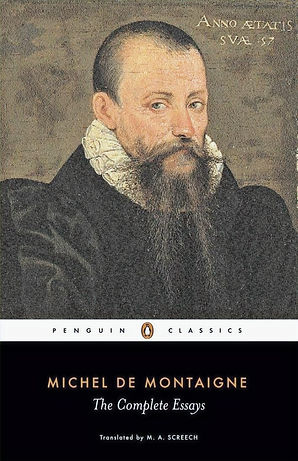
Essais (1588)
The Essais exercised an important influence on both French and English literature, in thought and style. They are contained in three books and 107 chapters of varying length. The Essays are among the most idiosyncratic and personal works in all literature and provide an engaging insight into a wise Renaissance mind, continuing to give pleasure and enlightenment to modern readers.
Penguin Classics, 1,344 pgs.
Behind the Green Lake (2035)
Essays
I'm a paragraph. Click here to add your own text and edit me. It’s easy. Just click “Edit Text” or double click me to add your own content and make changes to the font.
Order Now

Silent Light (2035)
A Novel
I'm a paragraph. Click here to add your own text and edit me. It’s easy. Just click “Edit Text” or double click me to add your own content and make changes to the font.
Order Now


